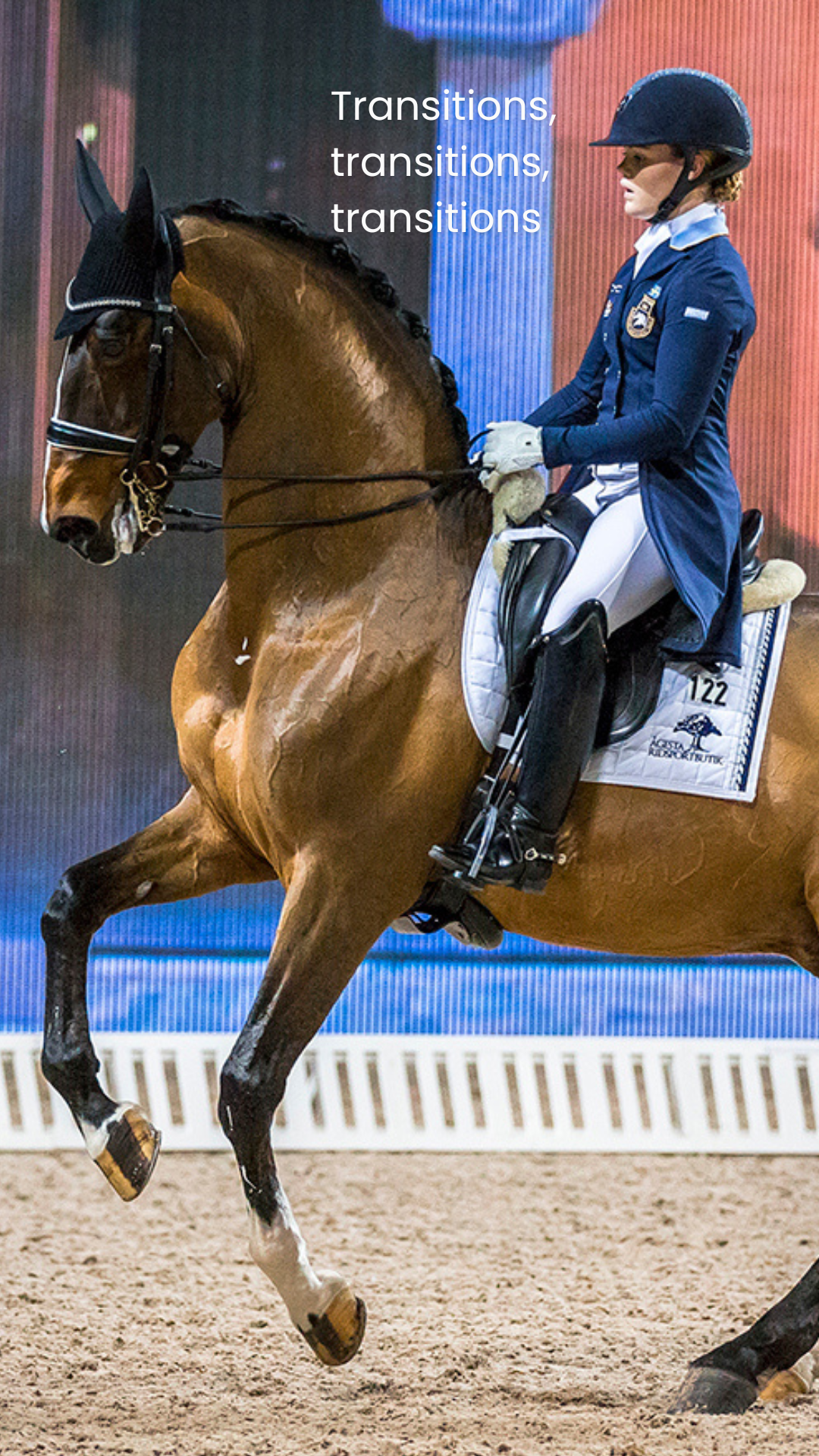
Transitions, Transitions, Transitions

If there is one exercise that benefits almost every horse and rider, regardless of discipline, it is transitions. Simple on paper. Incredibly valuable in practice. Transitions improve balance, responsiveness and communication between horse and rider. They encourage the horse to pay attention to the aids, engage the hindquarters and carry more weight behind rather than on the forehand. And the beauty of transitions is that they can be adapted to every level of riding.
For newer or younger riders, transitions often mean moving between gaits:
Walk to trot. Trot to canter. Canter to trot. Trot to halt.
These transitions help develop responsiveness, balance and understanding of the aids. As horse and rider become more educated, transitions can also happen within the gait itself.
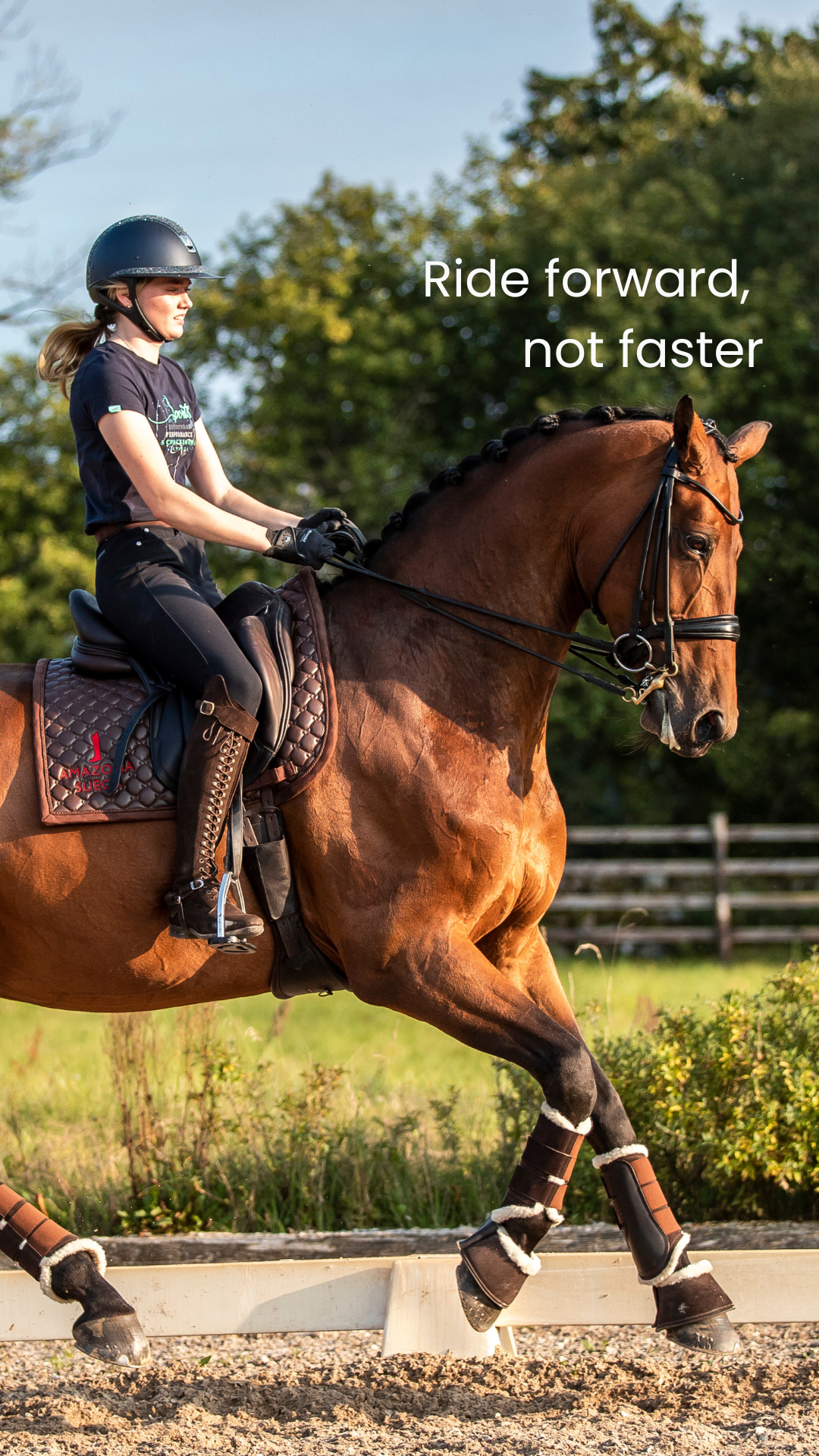
Working trot to medium trot. Medium trot back to working trot. Collected canter to a more forward canter. A few bigger strides, then back again.
Many trainers would argue that these transitions within the gait are just as important as transitions between gaits. They help build strength, balance, self-carriage and adjustability while teaching the horse to stay attentive to even the smallest aids. And perhaps most importantly, transitions reveal a lot. They quickly tell you whether your horse is truly in front of your leg, listening to your seat and connected to your hand.
The best riders in the world use transitions constantly. Not because they're exciting. But because they work. Whether you're riding dressage, jumping, eventing or simply enjoying a hack, transitions belong in almost every ride. Because better transitions often lead to better rhythm. Better balance. Better connection. And ultimately, better riding.
🤍 Mini challenge
During your next ride, add five extra transitions than you normally would. Try both transitions between gaits and transitions within the gait. Then notice what happens to your horse's balance, focus and responsiveness.